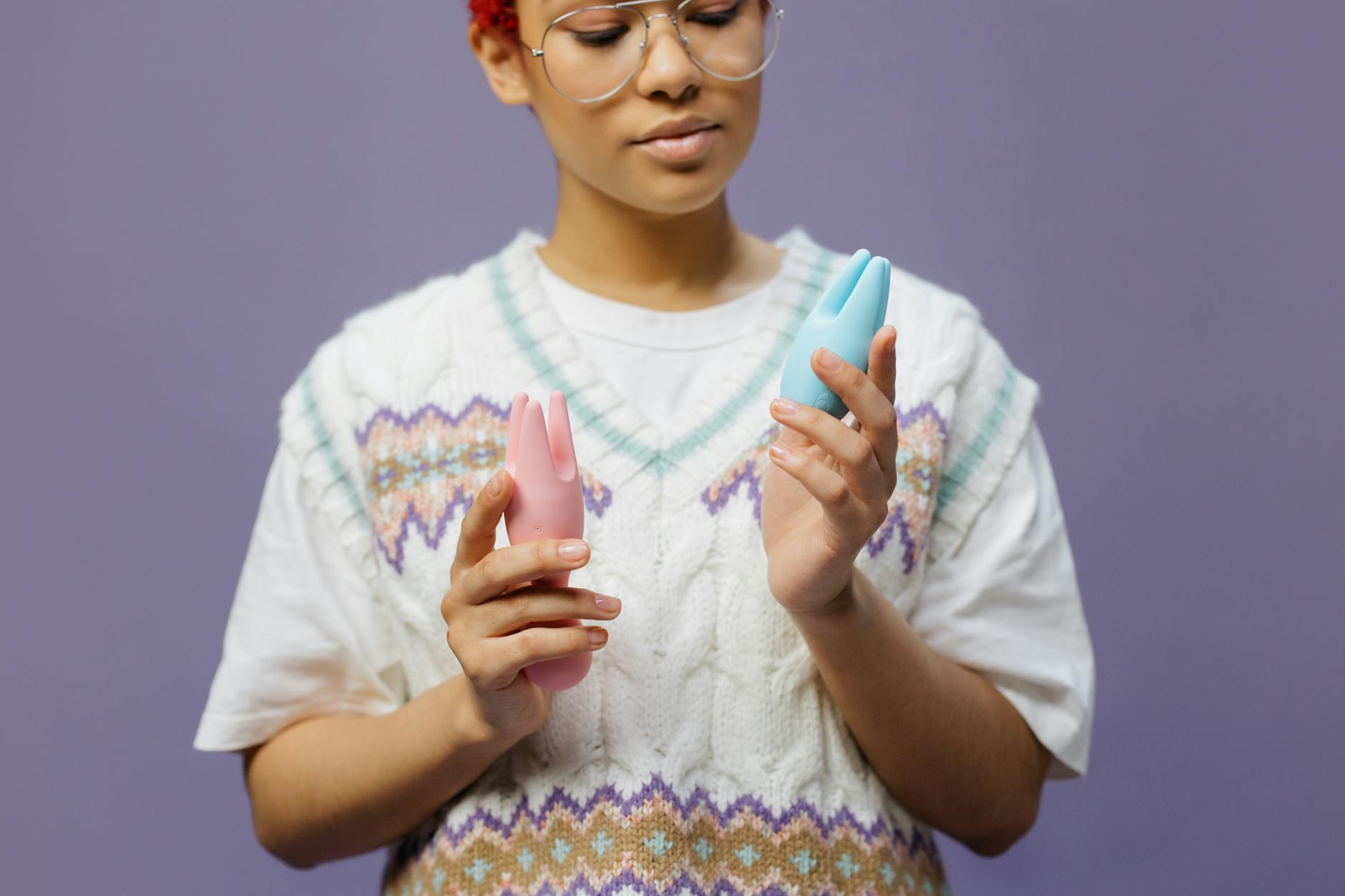
The feeling you're noticing is real
You finally bought that lemon vibrator you've been thinking about. You used it alone, figured out what feels good, and now you're about to bring it into bed with your partner. And suddenly it feels... different. Not bad, just unfamiliar in a way you didn't expect.
That shift isn't in your body. It's in the dynamic. Using a lemon clitoral vibrator solo is one conversation with your own pleasure. Adding your partner to that conversation changes the rhythm, the vulnerability, and what each of you is paying attention to. Understanding why helps you both navigate it without self-doubt creeping in.
What's actually changing
When you use a lemon vibrator alone, you control pace, intensity, and timing. You know exactly what you want in that moment. You can stop, adjust, go back. No negotiation required.
When your partner is present, even if they're just watching, you're now managing three variables instead of one: your pleasure, their presence, and the awareness that you're being perceived. That's not a flaw. It's just more complexity. Your nervous system registers that shift even if your brain hasn't consciously named it yet.
Many couples tell me the vibrator feels "stronger" when a partner is in the room, even though nothing about the device has changed. What's changed is your baseline arousal and attention. You're not in a purely self-focused state anymore. For some people that amplifies sensation. For others it creates a brief delay while they recalibrate.
The three most common shifts
Rhythm disruption. You've probably practiced the motions with yourself. You know the pattern that gets you there. The moment your partner is involved, you might feel pressure to match a pace they're expecting, or you might second-guess the timing. It feels like the vibrator isn't working as well, when really you've just changed the choreography.
Vulnerability weight. Asking for solo pleasure is one thing. Accepting it openly with a partner watching is different. Even in trust-based relationships, letting someone see you climax using a vibrator can feel more exposed than intercourse. You're not performing. You're not doing it "for" them. The vibrator keeps the focus on your own sensation, which paradoxically can feel more intimate and more vulnerable at the same time.
Timing mismatch. If your partner is touching you while you're using the lemon vibrator, or if they're using it on you, the coordination matters. You can't both control the same rhythm perfectly. That asynchrony is fine. It's actually useful. It means you have to communicate, adjust, and stay present instead of going into autopilot.
Why lemon vibrators change the texture of partnered sex
Lemon clitoral vibrators use suction and gentle pulsation instead of direct vibration. That means they work really well in partnered scenarios because they're not trying to compete with manual stimulation. A partner can touch your body, enter you, kiss you, hold you while the lemon vibrator works your clitoris. The layers stack.
Unlike some toys that can feel abrasive or overstimulating in partnership, a lemon sucker actually creates space for other sensations. Your partner can read your face, feel your breathing change, respond to what they're seeing. The vibrator does its job. They do theirs. No one's fighting for control.
This is why couples tell me that introducing a clitoral vibrator often deepens intimacy rather than replacing it. You're not outsourcing pleasure. You're adding a tool that lets both partners be more present.
The conversation before you use it together
Most of the awkwardness I see doesn't come from the vibrator itself. It comes from ambiguity about what's supposed to happen.
Before you bring it into partnered sex, say three things out loud.
First: why you want to use it. "I think this could help me feel more pleasure," not "because you're not doing enough." That distinction matters. A lot. Your partner might hear a vibrator as criticism if you haven't already made clear it's about expanding sensation, not replacing what they do.
Second: what you want them to do. Do you want them to hold it? Watch? Touch you too? Ignore it and focus on something else? Your partner can't read your mind, and assuming they know is how resentment starts. Be specific.
Third: that you'll probably need to adjust. The first time using a lemon vibrator together might feel clumsy. That's completely normal. You're adding a new variable. Give it three times before you decide whether it's working. Most couples find the first attempt awkward and the third attempt delicious.
When your partner thinks the vibrator means they're not enough
This insecurity shows up more often than you'd think, especially in newer relationships or after a period of disconnection. A partner might interpret your desire to use a vibrator as a rejection.
Here's what helps: frame it as expansion, not replacement. You're not swapping them for a toy. You're inviting them into a fuller version of your pleasure. Some partners actually find it incredibly sexy to watch someone they care about experience intense sensation. Some need to be told that explicitly before they believe it.
If your partner is struggling, consider using the vibrator on yourself while they watch, rather than having them hold it immediately. That removes the pressure of performance and lets them see that you're still fully present with them in the room. Once they understand it's not about absence of desire for them, most partners relax.
The physical sensations to expect
When you're aroused with a partner present, blood flow to the genital area increases even before the vibrator touches you. That means your clitoris might be slightly more sensitive than it is when you're solo. A lemon sucker works by creating suction that draws tissue upward and stimulates nerve endings across the clitoral complex.
With a partner, you might notice the sensation feels sharper, more expansive, or harder to sustain than you remember from solo use. That's usually because you're holding some attention on them instead of pouring all focus into sensation. It's not a problem. It's just different.
If you find the vibrator feels too intense, resist the urge to immediately turn it down. Often what you're feeling is heightened sensation from being aroused, not the vibrator being too strong. Give it 30 seconds. Your body recalibrates.
How to introduce it without making it weird
Start small. You don't need a whole conversation ritual about this. You can literally say, "Hey, I want to try using that lemon vibrator I got. Can we experiment together?" That's it.
When you're already intimate, introduce it. Don't suddenly bring it out mid-foreplay like a surprise. Tell them you're going to use it before you do. Let them adjust their expectations.
Many couples find it easiest to use a lemon clitoral vibrator during oral sex. Your partner is already focused on that area. You add the vibrator. Everything builds together instead of shifting dynamics.
If you feel self-conscious, remember: your partner chose to be intimate with you. Watching you experience genuine pleasure is not a turn-off for most people. It's the opposite. Your satisfaction matters to them. The vibrator is just a tool that helps you reach it.
After the first time
Talk about what you each noticed. Not in an analyzing-the-failure way. In a curious way. What felt good? What felt odd? What do you want to try differently next time?
You might find that using a lemon vibrator together becomes a regular part of your intimate life. You might find it's a sometimes thing. You might find you prefer using it solo and that's equally valid. There's no "right" frequency. There's only what works for both of you.
Most couples report that the vulnerability of that first shared experience actually strengthens the relationship. You asked for what you wanted. Your partner showed up. You both learned something about pleasure together. That's not a small thing.
People also ask
Will using a vibrator with my partner during sex make them feel inadequate?
It might, if they already carry insecurity about their performance. But that's not the vibrator's fault. It's about how you introduce it and the security in your relationship. A partner who trusts that you're still attracted to them usually understands that a vibrator is about adding sensation, not replacing their touch. Frame it as exploration together, not as feedback that they're not enough. If they continue to feel insecure, that's a relationship conversation worth having outside of the bedroom first.
Can you use a lemon vibrator during intercourse?
Absolutely. Many partners appreciate clitoral vibrators during penetration because it adds to the arousal and orgasm potential without interfering with their rhythm. You can hold it, they can hold it, or you can both touch it together. There's no single right way. Some couples find it enhances sensation for both partners. Experiment to see what works for your bodies and your connection.
What if the vibrator feels different when my partner is using it on me versus when I use it on myself?
That's super common. When someone else controls the vibrator, you lose the ability to adjust on the fly. You're also managing the vulnerability of letting someone else control your pleasure. Your body might respond more slowly because you're in a different nervous system state. Give it time. If your partner learns your rhythm and you learn to communicate what feels good, it usually becomes just as pleasurable, just in a different way.
Why does using a lemon clitoral vibrator with my partner feel less intense than alone?
You're likely splitting your attention between sensation and connection. When you're solo, everything funnels into your body's response. With a partner, part of you is tracking them, reading them, feeling the weight of their presence. That's not bad. It's just different. Some people find this actually extends pleasure because orgasm takes longer to build, which can make it more satisfying. Others need time to adjust to the shared attention.
Is it normal to feel awkward the first time we use it together?
Completely. You're introducing a new variable into intimacy. That always requires a brief recalibration period. Your nervousness might make arousal take longer. Your partner might be unsure how to touch you or where to position themselves. None of that means the vibrator is wrong. It means you're both learning something new together. By the third time, most couples report it feels natural.
How do I know if my partner is actually okay with the vibrator even if they say they are?
Watch their body language and response over time. If they're genuinely supportive, they'll be engaged during sex, they'll ask what feels good, and they'll seem interested in your pleasure. If they're withdrawn, performative, or suggest using it less often, there might be underlying insecurity worth addressing. The best fix is ongoing communication. Check in after. Ask what worked and what didn't. Give them space to be honest about their feelings, and be willing to adjust how you introduce the vibrator if that helps them feel more secure in the relationship.
The shift is temporary
What feels different right now is just the adjustment period. After a few times using a lemon vibrator with your partner, it becomes part of your regular intimacy. The novelty wears off. What remains is just another tool for pleasure, no different than a hand or a mouth.
The fact that you're asking these questions means you care about both your pleasure and your partner's comfort. That thoughtfulness is what actually determines whether this works. The vibrator is just a device. The relationship is what matters. Use it in service of deeper connection, and it almost always enhances things instead of complicating them.