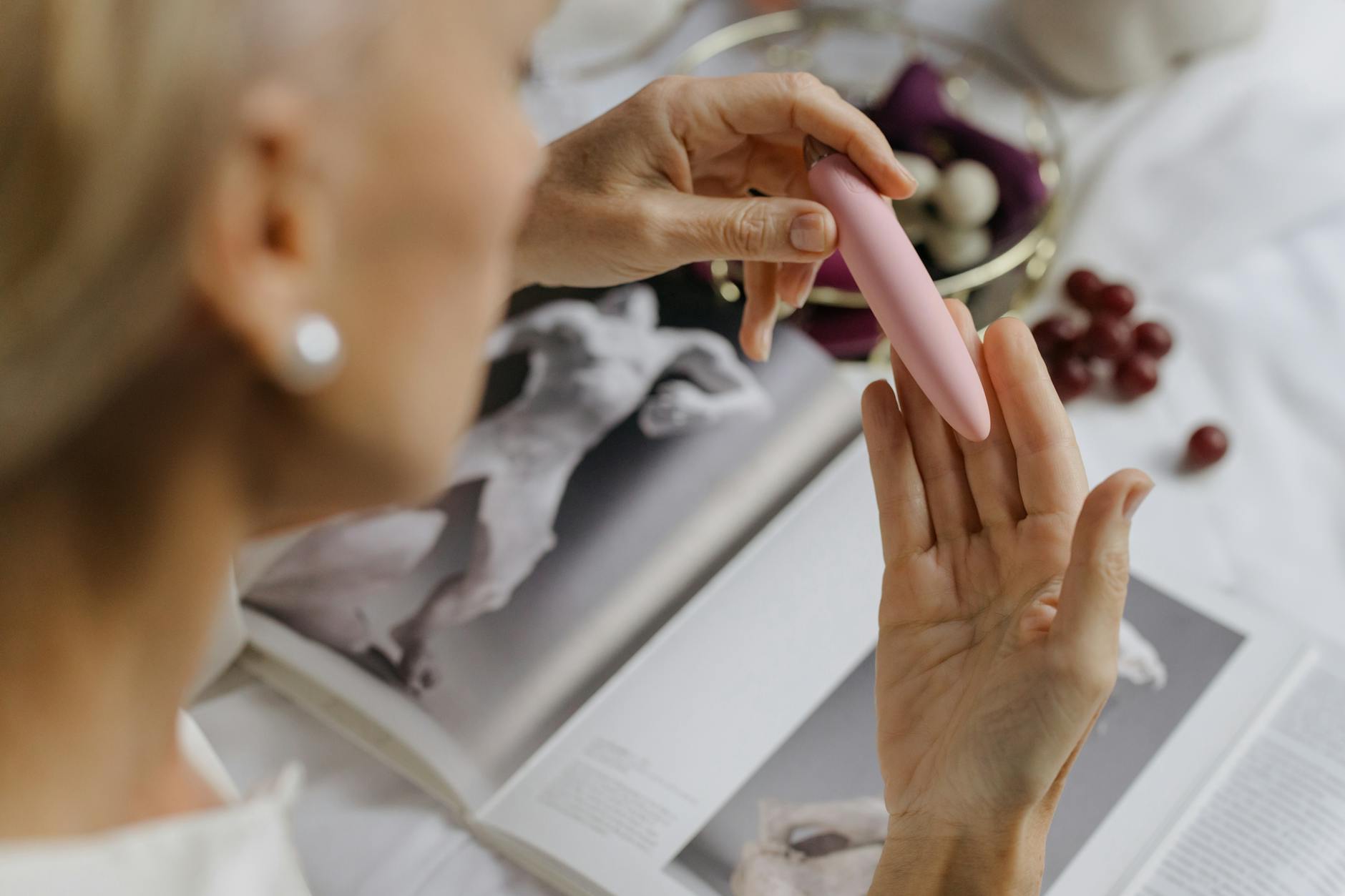
Your doctor clears you for sex. You're supposed to feel excited. Instead you feel... nothing. Or worse. Numb. Tender. Anxious about your body. Exhausted from responding to someone else's needs when you haven't slept in forty-eight hours. That gap between medical clearance and actual desire is real, and it's not a sign that something's broken.
Postpartum recovery rewires more than just your pelvic floor. Hormones drop dramatically. Tissue changes. Your nervous system is running on fumes. The clitoris is still there, the nerve endings are still there, but the whole circuit feels switched off. That's not permanent. But it does require a different approach than before pregnancy.
Here's what I've learned from working with couples through this transition: lemon clitoral vibrators can be a game-changer for rebuilding sensation when your body feels unfamiliar.
Three things shift immediately after birth, whether you had a vaginal delivery or a cesarean.
First, estrogen crashes. This affects tissue thickness and lubrication everywhere. The vagina becomes less elastic, the clitoral tissue thins slightly, and everything feels less engorged. Second, your pelvic floor has been through something significant. Even with a cesarean, the ligaments have shifted to accommodate pregnancy. Everything feels either too tight or too loose or somehow both at once.
Third, your nervous system is in survival mode. You're managing sleep deprivation, hormonal chaos, the constant vigilance of newborn care, and probably some degree of touch overload from feeding or holding an infant all day. When someone (a partner) initiates sex, your body doesn't read it as pleasure. It reads it as one more thing touching you when you're already touched out.
None of this means you've lost the capacity for pleasure. It means your body needs a reset button that you control.
Lemon vibrators, including The Lem, use air-suction technology rather than direct vibration alone. This matters postpartum for three specific reasons.
First, suction stimulates the nerve endings without the friction that can feel raw or uncomfortable on postpartum tissue. You get clitoral stimulation without the mechanical pressure that might trigger sensitivity or pain. Second, the suction sensation is genuinely novel to most people. Because it's different from partnered touch, it doesn't trigger the same "I'm being touched again" fatigue response. Your nervous system recognizes it as something distinct, which can help reactivate arousal pathways.
Third, lemon clitoral vibrators give you full control of intensity, pacing, and duration. You're not managing someone else's arousal or timing. You're exploring your own sensation at your own speed, which is exactly what postpartum bodies need.
Medical clearance at six weeks is when penetrative sex is typically safe again (assuming uncomplicated delivery). But pleasure exploration can start earlier, and should look different.
If you're four to six weeks postpartum, stick to external-only exploration. No penetration, no internal pressure. A lemon vibrator is perfect here because it's designed entirely for external clitoral sensation. Start with the lowest setting, ten to fifteen minutes maximum, just to see how your body responds.
At six to eight weeks, if things feel good, you can gradually increase intensity and duration. But there's no rush. The point isn't to get back to pre-baby sex. The point is to reconnect with your own pleasure on your own terms.
By ten to twelve weeks, if you feel ready and your body feels mostly recovered, you can reintroduce partnered activity alongside solo exploration. The key is doing both. Solo time helps you rebuild sensation and confidence. Partnered time helps you reconnect with your partner without pressure to perform.
Start slow, literally. Use the first two patterns on your lemon vibrator (or whichever clitoral vibrator you choose). Your tissue is more sensitive right now. What felt mild before pregnancy might feel intense now.
Second, use lubrication even though the sensation of suction itself creates moisture. Postpartum tissue is thinner and drier. Water-based lube helps prevent irritation and makes the whole experience more comfortable. Apply it to the device before you start.
Third, set a time limit and stick to it. Fifteen to twenty minutes is plenty, especially early on. Your nervous system needs to remember what pleasure feels like, but it also needs time to process.
Fourth, consider scheduling this when you won't be interrupted. The irony of postpartum life is that you're touched out by everyone else and need to touch yourself, but finding five minutes alone feels impossible. If you can protect ten to fifteen minutes without your phone, a baby monitor, or a partner waiting in the next room, do it. That mental safety is part of what allows pleasure to return.
If you have a partner, bringing a lemon vibrator into the bedroom can actually reduce pressure, not increase it. Here's why: it gives your partner something to do that isn't about their own pleasure or timing. It refocuses both of you on your sensation.
Start with a conversation outside the bedroom. "I'm ready to explore again, but my body feels different. I'd like to try this together, at my pace." That's the entire script you need.
When you do come together, let your partner use the vibrator on you while you direct them. Intensity. Speed. Pattern. Duration. You're teaching them how your postpartum body works now. This takes pressure off you to perform and gives your partner concrete feedback about what you like.
Many couples find that this actually deepens intimacy in the first few months postpartum because the focus is entirely on sensation rather than intercourse. Intercourse will return. Right now, reconnection is the goal.
Pain that shoots, burns, or feels sharp. Persistent heavy bleeding or spotting after solo exploration. Sensation of heaviness or pressure in the pelvic floor. Any sign of infection (unusual discharge, fever, foul smell). These all warrant a conversation with your OB or midwife before you continue.
Also pause if you notice that exploration is triggering anxiety, flashbacks to labor or delivery, or feelings of numbness or dissociation. Postpartum anxiety and postpartum depression are real and common, and they absolutely affect your ability to access pleasure. That's not a reason to push through. That's a reason to talk to a therapist or your doctor.
Here's what people rarely say out loud: it's hard to want sex when you're two months into parenthood. Your partner might feel far away emotionally. You might resent them for not understanding how touched out you are. The baby's sleep schedule has become the structure of your whole life.
Solo exploration with a lemon vibrator helps with the physical part of pleasure. But rebuilding desire requires something else: reconnecting with your partner in non-sexual ways first. Touch that isn't sexual. Conversation that isn't logistics. Time that isn't about the baby.
If this resonates, consider talking to a couples therapist. Postpartum is a major life transition, and the relationship stress is real even when the love is solid. Having space to talk about resentment, touch preferences, and shifting identity outside the bedroom helps the bedroom stuff follow more naturally.
Every body is different. Some people feel like themselves again by sixteen weeks postpartum. Others take six months or longer. Breastfeeding delays the return of estrogen, which can extend the sensation recovery window. Ongoing sleep deprivation affects everything. If you had complications or trauma around delivery, that emotional and physical recovery takes longer.
The goal isn't to get back to "normal." Postpartum you is a different version of yourself, and your pleasure might look different too. It might be shorter, quieter, less intense. Or you might discover that you prefer different things now. That's not loss. That's evolution.
But if twelve weeks have passed and you're still feeling completely numb, or if pleasure feels impossible to access, talk to someone. Your OB, a pelvic floor physical therapist, or a sex therapist. That's not overreacting. That's good self-care.
Postpartum pleasure doesn't return on a timeline. It returns when your body feels safe enough and your nervous system has enough bandwidth to notice sensation again. A lemon vibrator is one tool for speeding that process. But the real work is patience with yourself, honest conversations with your partner, and permission to rebuild slowly.
You don't have to rush back to sex. You don't have to want it yet. But when you do, your body is still capable of extraordinary sensation. It just needs the right conditions and the right support.
Yes, absolutely. A cesarean is major abdominal surgery, but it doesn't affect the clitoris or external genital tissue. You can start external solo exploration around six weeks postpartum if your surgical recovery is on track. Internal pressure or penetration should wait until you feel fully healed, usually eight to ten weeks. Always talk to your surgeon if you're unsure about your specific recovery.
For external-only exploration, you can start around six weeks postpartum, assuming your doctor cleared you and you're not actively bleeding or in pain. That said, there's no rush. If you're exhausted or overwhelmed, waiting until eight or ten weeks is completely reasonable. Start when you feel physically and emotionally ready, not because a timeline says so.
A vibrator isn't treatment for postpartum mood disorders. But once you're getting professional support (therapy, medication, or both), solo pleasure exploration can be part of reclaiming your body and your sense of self. Talk to your therapist about whether now is the right time to reintroduce pleasure into your routine. Some people need to stabilize their mood first.
This is one of the most common sources of conflict postpartum. You need to say it directly: "My body is healing. I need more time." If your partner pressures you, that's a relationship issue that needs couples counseling. You're not broken or withholding. You're recovering from one of the most significant physical events of your life. That deserves respect.
Yes. Breastfeeding doesn't prevent solo pleasure, though it might affect your hormones' impact on arousal. Many people feel more disconnected from their body while nursing because so much touch is already happening. That's normal. A lemon vibrator can help you reclaim sensation that feels separate from caregiving touch.
Sharp pain, burning, or pain that makes you catch your breath is not normal. Mild tenderness or slight discomfort as things adjust is more common. If you're unsure, pause and check with your OB or a pelvic floor physical therapist. They can assess whether it's normal postpartum sensitivity or something that needs treatment (like scar tissue, pelvic floor tension, or infection).
Postpartum isn't about returning to who you were before. It's about discovering who you are now. Your body, your pleasure, your relationship, your identity as a parent and as a sexual being. All of it is shifting. A lemon vibrator can help you reconnect with physical sensation while you're figuring out the rest. But the real work is giving yourself permission to rebuild at your own pace, and trusting that pleasure is worth the time it takes.