How Lemon Vibrators Improve Sensation When You're Taking Hormonal Birth Control
Let's be real: hormonal birth control is excellent at preventing pregnancy. It's also weirdly good at muffling pleasure.
Science
Hormonal contraception doesn't have to mean goodbye to pleasure. Here's what's actually happening to your nerve sensitivity, and why lemon vibrators work when other tools don't.
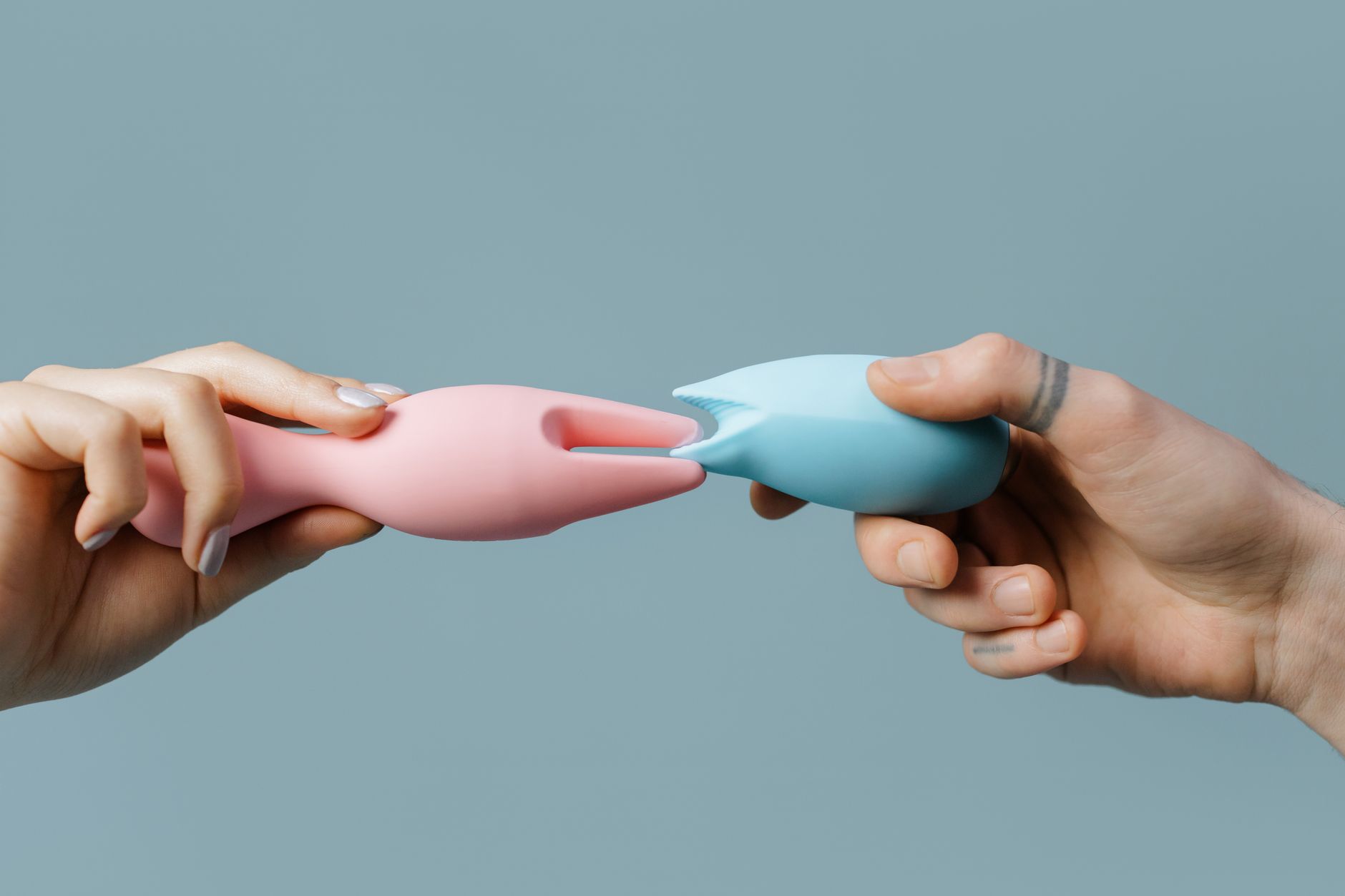
Let's be real: hormonal birth control is excellent at preventing pregnancy. It's also weirdly good at muffling pleasure.
Not for everyone, and not always dramatically. But if you're on the pill, patch, ring, or shot, and you've noticed that things feel a little less sensitive down there, you're not imagining it. Your brain isn't playing tricks. Your hormones literally are.
Here's what's happening physiologically, why it matters for pleasure, and exactly how lemon vibrators work around this particular physiological speed bump.
Hormonal contraceptives work by suppressing ovulation, which means they flatten your natural hormone cycle. Instead of estrogen and progesterone rising and falling across the month, you get a steady, lower baseline of both. This stability prevents pregnancy beautifully. It also changes how your clitoral tissue responds to stimulation.
Your clitoris is packed with nerve endings. Those nerve endings are estrogen-sensitive. When estrogen drops and stays dropped, the tissue becomes less engorged with blood, less plump, less reactive to touch. It's not numb. It's more like the volume got turned down.
Progestin, the synthetic progesterone in most pills, can also slightly increase vasoconstruction (tighter blood vessels), which further reduces the engorgement and sensitivity you'd normally get during arousal. Add in the fact that some formulations can lower testosterone just slightly, and pleasure becomes a little harder to access. The pathway is still there. It's just quieter.
Standard vibrators rely on rhythm and friction to create sensation. When clitoral tissue is already somewhat desensitized from hormonal suppression, you need more intense friction to feel anything at all. This often means turning up the power, which can feel overwhelming or even uncomfortable on tissue that's already slightly irritated from the extra effort.
It's a catch-22: you need more stimulation to feel the same amount of pleasure, but more stimulation sometimes feels worse because the tissue isn't as resilient.
Lemon vibrators, specifically suction-based clitoral toys, work on a completely different principle. Instead of vibration against tissue, they create a gentle pulling sensation that stimulates the entire clitoral structure, not just the surface. This works brilliantly when you're on birth control because suction doesn't rely on friction to generate sensation. It creates a different kind of stimulation that the nervous system still registers as intense and pleasurable, even when blood flow and tissue engorgement are lower.
Think of it this way: vibration is horizontal movement across tissue. Suction is vertical pressure change around tissue. When you're on hormonal birth control and your clitoris is less engorged, suction stimulates the entire clitoral bulb (the internal parts you can't see) more effectively than vibration alone.
The Lem vibrator, for example, uses gentle pulsing suction that creates a consistent pulling sensation. This doesn't require the same level of tissue engorgement that vibration does. Your clitoris doesn't have to be super aroused and plump for you to feel it intensely. The suction works with your current physiology rather than against it.
Many people on birth control report that lemon vibrators feel more consistent than traditional vibrators. You don't have to be at peak arousal for it to feel good. You don't have to keep adjusting the intensity because the first setting is actually hitting the target.
Beyond clitoral sensitivity, hormonal birth control can affect pleasure in other ways worth knowing about. Lubrication sometimes decreases slightly because estrogen supports vaginal moisture. This is usually subtle, but it's another reason why having a good water-based lubricant nearby matters. Apply it before you start, not as a last resort.
Libido itself can shift. Some people feel less interested in sex overall on hormonal contraception. Others feel more interested because the pregnancy risk anxiety is gone. There's no single hormonal birth control effect. It depends on the formulation, your body's sensitivity to hormones, and honestly, your relationship, stress levels, and a hundred other variables. But if you're experiencing lower desire alongside lower sensation, the two are likely linked.
One more thing: certain formulations affect other hormones. The pill can increase sex hormone binding globulin (SHBG), which binds up testosterone and makes it less available to your body. This is usually a small effect, but over months and years, it can contribute to feeling less spontaneously interested in sex.
Use lemon sexual toys, yes. But also stack other tactics that restore sensation.
First, timing. If you can, use lemon clitoral vibrators during the high points of your cycle. Even on hormonal birth control, there's usually a slight hormone fluctuation. Usually it happens around the placebo week (if you take a break from pills) or the hormone-free days. Your tissue will be slightly more responsive.
Second, warm-up time. Allocate more foreplay than you might have pre-birth control. Fifteen to twenty minutes of mental and physical warm-up before lemon vibrator use means more blood flow to your clitoris and more natural lubrication. Your body hasn't changed its capacity for arousal. It just needs a longer runway.
Third, talk to your doctor if sensation loss is severe. Some formulations affect libido and sensation less than others. If you're on a high-progestin pill or a formulation that's known for lowering libido, switching to a different hormonal contraceptive might help. This isn't dramatic or risky. It's just finding a better fit.
If you've tried lemon vibrators, adjusted your warm-up routine, and sensation still feels significantly dulled, the birth control itself might not be the right choice for your body. That's not a failure. That's useful information.
Non-hormonal options like copper IUDs don't suppress your natural hormone cycle, so they don't affect clitoral sensitivity the same way. Barrier methods have no hormonal effect at all. If pleasure is a priority for you and birth control is making it harder to access, talking with your doctor about alternatives is completely reasonable.
Alternatively, adding back a tiny bit of estrogen (which some doctors can do even on certain pills) or exploring progestin-only options with lower doses might help. There's no one-size-fits-all approach. The point is that you don't have to accept numbness as the cost of contraception.
Hormonal birth control and pleasure aren't mutually exclusive. They're just complicated. The hormones suppress your natural cycle, which reduces clitoral tissue engorgement and can lower desire. But lemon vibrators, with their suction-based approach to stimulation, work around this physiological reality. Combined with longer warm-up time, good lubrication, and potentially a conversation with your doctor about formulation, you can maintain strong sensation and pleasure on hormonal contraception.
Your pleasure matters, full stop. And your birth control choice shouldn't have to be a trade-off.
Sensation often improves within a few weeks of switching, though it can take up to three months for your cycle to fully restabilize and for tissue engorgement to return to baseline. Some people notice a difference immediately. Others take longer. If you're considering a switch, give yourself at least a cycle or two to evaluate whether it's actually making a difference.
Absolutely. Hormonal birth control doesn't interact with lemon clitoral vibrators or any other external toy. The issue isn't safety. It's just that sensation might feel different, and suction-based toys often work better when tissue sensitivity is lower.
No. Some formulations affect libido and sensation more than others. Lower-dose pills and certain progestin types tend to have less impact. If you're on a formulation that's known for reducing desire, switching might help. This is worth discussing with your doctor.
They work differently, not necessarily better. For many people on hormonal contraception, suction-based stimulation is more effective than traditional vibration because it doesn't rely on the same level of tissue engorgement. But everyone's body is different. Some people find that increasing vibration intensity works fine. Others prefer the gentler, more consistent pull of a lemon sucker vibrator.
Yes. Hormonal contraception can slightly reduce natural lubrication, and lemon sexual toys work best with a barrier of water-based lube between the device and your skin. This protects your tissue and helps the suction work more effectively. Always use water-based, not silicone-based, lube with silicone toys.
Not at all. Lemon vibrators are great options if you're noticing sensation changes, but they're not required. Longer warm-up time, good lube, and maybe experimenting with different vibration patterns might be enough. The goal is finding what works for your body right now, on the contraception you've chosen.
If you want to dive deeper into how hormonal contraception affects sexual function, the research is solid. The American Journal of Obstetrics and Gynecology has published multiple studies on libido and sensation changes on the pill. If you're considering switching methods or formulations, talking to a healthcare provider who specializes in sexual health will give you options tailored to your body.
For more on using lemon vibrators effectively, check out our guides on how to choose the right lemon vibrator suction intensity for your body and how to use lemon vibrators when you feel disconnected from your body during intimacy. Both explore the mechanics of sensation in more detail and offer practical tactics that apply whether you're on birth control or not.
Your pleasure isn't negotiable. Your birth control choice shouldn't erase it.