Let's start with the obvious part nobody says out loud
Disconnection from your body is real. It's not laziness, it's not brokenness, and it's not something you need to be ashamed of. When your nervous system has learned to protect you by stepping back, pleasure can feel like a foreign country. You might feel present in your brain but absent from your skin. Or you might notice that sensation registers but doesn't land emotionally. That gap between feeling something and actually feeling it is what I'm talking about.
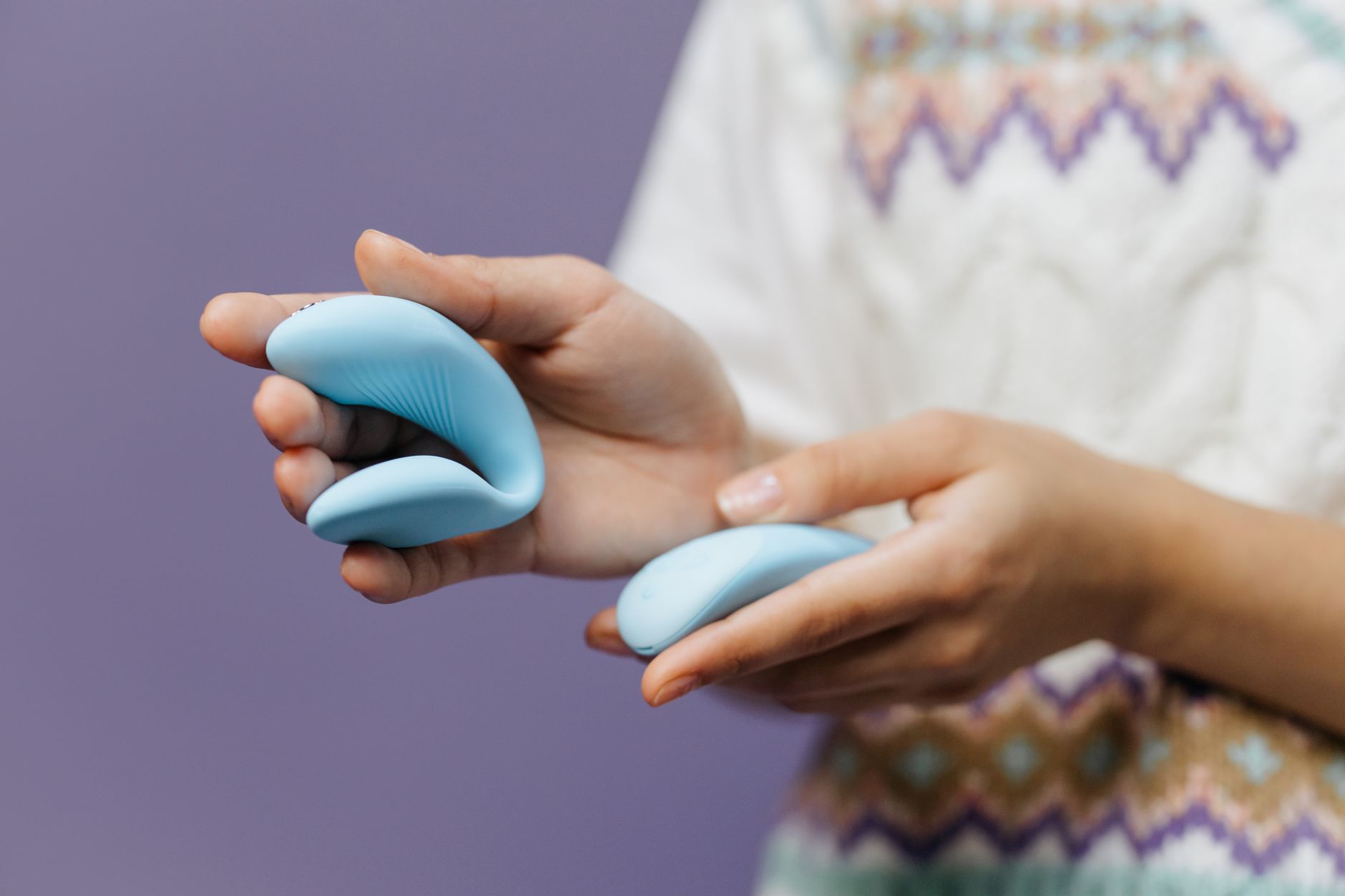
Lemon vibrators, specifically their air-suction design, work differently than traditional vibration because they demand presence. You can't use them on autopilot. That's not a flaw. That's the point.
Why dissociation and pleasure seem incompatible
Your nervous system has one job: keep you safe. When emotional events, repeated stress, or relational rupture signal that staying present isn't safe, your system does exactly what it's supposed to do. It dampens sensation. It creates distance between your mind and body. This is dissociation, and it's a feature, not a bug. But it makes pleasure nearly impossible because pleasure requires presence.
When you try traditional vibrators while dissociated, two things often happen. Either you feel nothing at all (your body has the sensation but your brain doesn't register it), or you feel something but it lands flat, like watching a movie instead of living in a scene. Adding more intensity doesn't fix this. Your nervous system just turns the volume down further.
Lemon vibrators break this pattern because of how they work. The pulsing suction creates a rhythm that's harder to ignore. It's not about more stimulation. It's about stimulation that asks your brain to track what's happening.
The neuroscience of reconnection through sensation
Here's what's happening inside when you start using lemon clitoral vibrators after a period of dissociation. Your brain has learned to downregulate sensation as a protection strategy. That skill is useful in crisis. But pleasure requires something different: the ability to notice, attend to, and amplify sensation rather than suppress it.
When you use a lemon vibrator, several things activate simultaneously. The rhythmic suction creates a clear sensory signal that's distinct from ambient touch. Your brain has to track a pattern (the pulse, the pause, the rebuild). This demand for attention is what pulls you back into your body. Neurologically, you're retraining your nervous system to notice and stay present with sensation.
This isn't meditation. You're not sitting quietly and trying to feel. You're actively stimulating and your brain is following the sensation. Over time, this rewires your default setting from "step back" to "stay present." Many of my clients report that after a few weeks of regular use, they start noticing sensation in other parts of their life too. They feel the shower water differently. They taste food more vividly. The reconnection spreads.
Starting when you're still in the fog
If you're in active dissociation, here's what works and what doesn't. Skip the idea that you need to "feel ready" first. You won't. Your nervous system isn't going to give you permission because it's still in protection mode. You're going to need to gently challenge it instead.
Start with intention, not hope. Name what you're doing out loud or in writing. "I'm using a lemon vibrator today to rebuild connection with sensation in my body. This is safe. This is mine." This simple act of narration pulls your prefrontal cortex (the part that plans and thinks) into the experience. It anchors you.
Use the lowest pattern first. Most lemon clitoral vibrators have 5-7 settings. Start at 1 or 2. Your goal isn't orgasm. It's sensation. Can you notice the pattern? Can you follow the rhythm with your breath? Can you notice when the pulsing stops and you want it to start again? These micro-observations are what rewire your system.
Don't expect sensation to feel good at first. Reconnection often feels weird before it feels good. You might notice heaviness, tingling, warmth, or nothing at all. All of these are progress. You're training your brain to notice what your body is sending. That's the skill you're rebuilding.
The role of safety and consent with yourself
Here's what most guides get wrong: they assume the problem is arousal. It's not. The problem is that your nervous system doesn't feel safe enough to let you experience pleasure. You can't force this. But you can negotiate with your system.
Before using a lemon vibrator, spend three minutes naming three things that made you feel safe this week. Could be small (a text from a friend, a good coffee, the way afternoon light looked). Could be bigger (a session with a therapist, a conversation with your partner where they really listened). Just notice and name them. You're reminding your nervous system that safety exists.
Then, when you use the vibrator, make a deal with yourself. "I'll use this for 10 minutes. If it doesn't feel right, I'll stop. No judgment, no failure." Having an exit plan is what makes it safe to stay. Paradoxically, knowing you can leave makes it possible to be present.
Many people find that setting a time boundary helps too. "I'm going to spend 15 minutes with this, then I'm going to make tea and read." A defined beginning and end makes the experience feel contained. Your nervous system relaxes more easily when it knows when the vulnerable part ends.
What changes as you rebuild
Weeks 1-2: You're just noticing. Sensation might feel flat, distant, or confusing. This is normal. Your brain is learning a new language.
Weeks 3-4: Some days feel more present than others. You might have moments where you lose the fog for a few seconds. Short bursts of presence. Collect these. They're the evidence that rewiring is happening.
Weeks 5-8: You'll probably notice sensation improving in other contexts too. Touch from a partner lands differently. You taste food more vividly. These connections aren't random. Your whole nervous system is recalibrating.
Weeks 8+: Many people find that pleasure starts feeling possible again. Not forced, not desperate. Just available. Some have their first orgasm in months or years. Others find that the pleasure isn't primarily physical but emotional: the feeling of being back in their own body. Both are valid completions.
The timeline varies wildly. Some people shift in three weeks. Others take three months. Dissociation patterns that took years to build take time to reverse. Be patient with this. The goal isn't speed. The goal is steady, genuine reconnection.
When to add support beyond the vibrator
Lemon vibrators are a tool, not a cure. If you're dealing with trauma, ongoing dissociation, or you've been through significant emotional events, a trauma-informed therapist changes everything. The vibrator helps your body send signals. The therapist helps your mind receive them safely.
Same principle if you're in a relationship. A partner who understands dissociation and can help you anchor to the present (through grounding touch, eye contact, or simple narration like "I'm here, you're safe") multiplies what the vibrator can do. You're not meant to rebuild embodiment in isolation.
If pleasure remains completely unavailable after 8-10 weeks of consistent use, talk to a doctor. Numbness can signal underlying medical stuff too: thyroid dysfunction, medication side effects, neurological factors. Ruling that out matters.
The relationship between disconnection and control
One pattern I notice a lot: people who feel dissociated often feel powerless in other areas too. Using a lemon vibrator is an act of agency. You're choosing sensation. You're directing stimulation. You're rebuilding your capacity to feel pleasure on your own terms. This isn't trivial. For many of my clients, this is where the real healing starts. Not in the physical sensation itself but in the act of choosing to pursue it.
This is why I often recommend starting alone, before involving a partner. You need to know that pleasure belongs to you first. You need to remember that your body can be a place you inhabit, not a place you escape from. Once that foundation is solid, sharing it with someone else becomes possible and richer.
FAQ: Reconnecting through lemon clitoral vibrators
How do lemon vibrators compare to traditional vibrators for reconnection work?
Lemon vibrators use air-suction technology rather than linear vibration, which creates a rhythmic pattern that's harder for your brain to tune out. This rhythmic quality makes them particularly effective for people working through dissociation because they demand attention. Traditional vibrators offer more intensity but less pattern, which can actually make it easier to stay disconnected. The Lem's design specifically creates that rhythmic anchor that helps pull presence back.
Can you reconnect with your body if you're still in an unsafe situation?
It's much harder. Your nervous system is responding logically to real threat. If you're experiencing ongoing emotional or physical unsafety, reconnection becomes secondary to getting safe first. If you're working toward safety (leaving a relationship, getting distance from a harmful person), reconnection tools help. But if you're still immersed in the threat, the body's protective mechanisms are appropriate and shouldn't be overridden. Prioritize safety first.
What if using the vibrator triggers anxiety or panic?
Stop. This is your nervous system saying it needs something different. Common modifications: use it through clothing first, use it with a partner nearby, use it in daylight rather than at night, or try it right after a grounding activity like a cold shower or a walk. Anxiety signals that your system needs more safety scaffolding before this particular tool fits. Work with a therapist on grounding first.
Is there a difference between dissociation and low libido?
Yes. Low libido might feel like a flat desire. Dissociation feels like you're not in your body at all. With dissociation, you might intellectually want pleasure but feel nothing when you pursue it. With low libido, you just don't want to pursue it. The solutions are different. Dissociation needs reconnection work. Low libido might need hormonal investigation, relationship repair, or stress management. Make sure you're naming the right problem.
How do you know when you've truly reconnected?
When sensation lands emotionally, not just physically. When you can feel a touch and have an emotional response to it, not just register that it's happening. When you want pleasure for yourself, not because you think you should. When you can be present during the experience without effort. These happen gradually, then suddenly.
Should you tell your partner you're using a lemon vibrator for reconnection work?
If you're in a committed relationship, honesty helps. You don't need to detail everything, but something like "I'm working on reconnecting with sensation after feeling disconnected. I'm using a vibrator as part of that" invites them into the process rather than making it secret. Secrecy often reinforces dissociation. Openness about rebuilding embodiment often deepens trust. That said, this is your body and your choice. You don't owe disclosure if the relationship isn't safe.
The path forward
Disconnection from your body is a survival skill that outlived its usefulness. Reconnection is possible, but it requires patience and the right tools. Lemon vibrators aren't magic, but they are specifically designed to pull your attention back into sensation through rhythm and pattern. Combined with safety, intention, and time, they help you remember that your body is a place you can inhabit again. That's the real work. That's where pleasure comes back from.