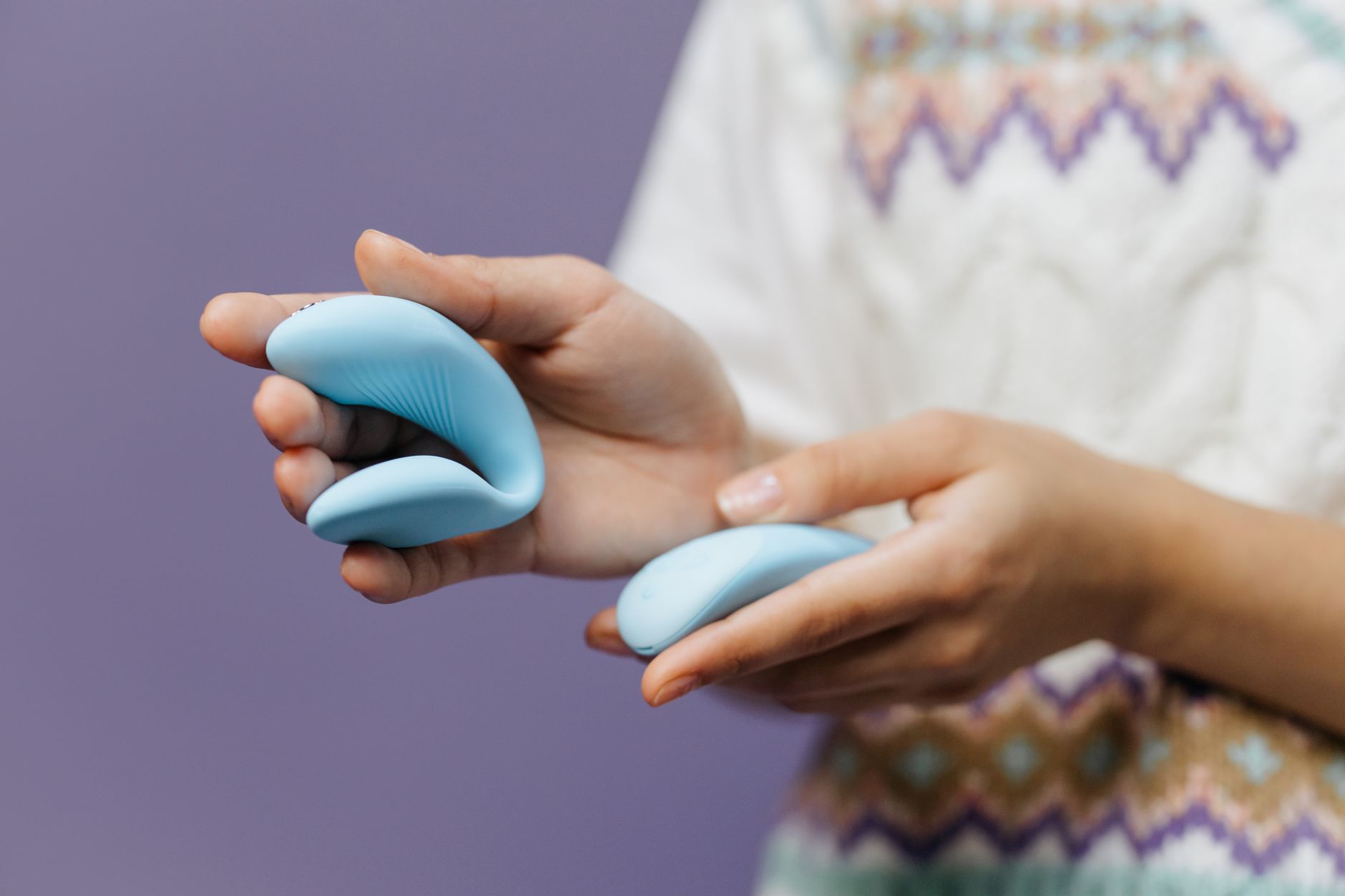
How Lemon Vibrators Feel Different in Long-Distance Relationships
Separation changes everything about solo pleasure. Here's what clitoral vibrators teach us about staying connected when you're miles apart, and why your body might respond differently than you expect.
Long-distance isn't just about missing someone. It rewires how your body processes pleasure, vulnerability, and desire. When a partner isn't physically present, using a lemon vibrator or any clitoral vibrator doesn't feel neutral. It feels loaded. That's not weakness. That's your nervous system being honest about what's happening.
I've worked with dozens of couples navigating separation. The ones who talk about pleasure openly, instead of pretending it doesn't change, are the ones who actually stay connected through the distance.
Three things happen neurologically when you're long-distance:
Absence registers as rejection, even when logically you know better. Your brain doesn't separate "my partner is in another country" from "my partner isn't here." The nervous system doesn't do nuance. When you're touching yourself without them, loneliness can spike faster than usual. Some people find they need clitoral vibrators more often. Others find they can't relax enough to use them at all.
Synchronization disappears. Sex with a partner has a rhythm you both create. Solo, you're entirely in charge of tempo, intensity, and when it ends. This is freedom, but it's also a different kind of pressure. People in long-distance relationships often report that orgasms feel more mechanical with lemon sexual toys when they first experience separation, because the emotional fuel that usually builds anticipation is running on fumes.
Touch deprivation changes what your body craves. After weeks without physical contact, some people find that a lemon sucker or other clitoral vibrator feels almost painful. Not in a bad way. In a way that means you're starving for sensation. Others find the opposite. They need lower intensity because every nerve is already firing.
In relationships with regular physical contact, desire often builds during the day and peaks at a specific time. Long-distance flips this. Many people find that their desire becomes scattered. You miss your partner at 2 a.m. You want to feel close at odd hours. Using a lemon vibrator at 3 a.m. isn't the same as using one at 9 p.m., when your partner would normally be available.
What helps here is permission. Permission to touch yourself when the longing hits, not just when it's convenient. Permission to use clitoral vibrators without it feeling like a substitute, which it isn't. It's just you, being honest about your body's needs.
Some long-distance couples find that scheduling intimate time together, even virtually, changes how toys feel. If you know you're going to video chat with your partner in an hour, using a lemon sucker beforehand might feel connective. If you're just trying to manage loneliness alone, the same action can feel isolating.
Here's what I tell my couples in long-distance: telling your partner you're using a clitoral vibrator is harder when you can't immediately be close to them. In-person relationships, you can use a toy together, show your partner, feel their response in real time. Long-distance, you're telling them about an intimate act they can't witness or participate in directly.
That absence of immediacy changes the emotional weight. Some people feel shame about using lemon vibrators long-distance because it means admitting "I'm managing my sexuality alone." But that's not a failure. That's adaptation.
The couples who thrive long-distance are the ones who normalize this conversation. "I used a lemon clitoral vibrator yesterday and felt closer to you afterward" is a sentence that sounds strange until you say it. Then it's just intimacy, in a different form.
When you use a lem vibrator or other clitoral toy consistently long-distance, several physical patterns emerge:
Orgasms often take longer to build. Without a partner's presence and energy, your nervous system is working harder to reach arousal. The amygdala, your threat-detection center, doesn't fully relax when you know you're alone for weeks at a time. This is completely normal. Budget extra time. Resist the urge to rush into higher intensities.
Lower patterns often feel better first. Lemon vibrators have multiple suction intensities for a reason. When long-distance loneliness is high, starting at pattern one and slowly building works better than jumping to maximum sensation. Your body will tell you when it's ready to go deeper.
Frequency often increases, then drops. Many long-distance partners find they use clitoral vibrators more frequently right after the other person leaves. Then, around week three or four, desire tanks. This is normal nervous system adjustment. Your body is recalibrating to a new baseline.
Video sex with a partner while using a lemon vibrator changes the experience completely. You're not alone, even though you are. Many long-distance couples find that synchronized toy use creates real intimacy. Seeing your partner's response, hearing them, knowing they're experiencing pleasure at the same moment, shifts clitoral vibrators from solo management tools into connection rituals.
If this is something you're considering, the most important thing is explicit consent and clear communication beforehand. "I'd like to be intimate with you while we're on video. Would you want to use toys too?" is the conversation that matters. The mechanics follow after trust is established.
Some people experience temporary anorgasmia or significant arousal drops during long-distance periods. If you find yourself unable to reach orgasm with a lemon sucker despite normal function before separation, you're not broken. Your brain is protecting you from the vulnerability of pleasure when the person you want to be vulnerable with isn't there.
This usually resolves within a few weeks. If it persists beyond two months, or if it coincides with other symptoms like depression or anxiety, it's worth checking in with a therapist. Prolonged intimacy shutdown during long-distance can signal deeper relationship distress or unmanaged mental health challenges.
Here's something nobody expects: the first time you see your partner again after an extended separation, sex can feel awkward. Your bodies have been on different schedules. You've been using lemon vibrators and clitoral toys independently. Suddenly, you're syncing again.
Give yourself grace. Spend the first few encounters just touching, without performance pressure. Use lemon sexual toys together if that feels right. Laugh at the awkwardness. Your bodies will remember how to move together. It takes a night or two, not months.
Using a lem vibrator long-distance is an act of self-preservation and self-care. It's you saying "my body matters, my pleasure matters, even when my person isn't here." That's not sad. That's powerful.
The hardest part isn't physical. It's emotional. It's building a relationship where you can tell your partner, "I used a clitoral vibrator and thought of you, and it made me feel less alone." That requires vulnerability. But that's where real intimacy lives, even across 3,000 miles.
There's no "should." Your body will tell you. Some people use lemon vibrators three times a week. Others use them once a month. The goal isn't frequency. The goal is staying connected to your own pleasure and your own body. If you're using a lem vibrator to avoid feeling lonely, pause and check in with yourself. If you're using it because your body wants stimulation, go ahead.
Absolutely not. The opposite is often true. People who stay connected to their own pleasure long-distance report higher satisfaction when they reunite. You're not replacing your partner with a lemon sucker. You're maintaining your nervous system's capacity for pleasure until you can create that together again.
It feels weird. Then it becomes normal. You can start simple: "I've been thinking about us using toys together when we're back in the same place." That opens the door without demanding immediate reciprocation. Many long-distance partners find this conversation actually deepens trust. You're saying "I want pleasure with you, and I'm managing my body until I can have that." That's honest.
Only if you both want to. This isn't a magic fix for long-distance. It's a tool that works beautifully for some couples and feels performative for others. The best intimate moments long-distance are often the ones that emerge organically from conversation, not planned performances. Test it once. If it feels good, keep it on the table. If it feels forced, don't.
That's common, especially in the first few weeks. Your body is grieving physical absence, even if your mind knows it's temporary. But if that shutdown lasts beyond a month, or if it coincides with broader depression or relationship doubt, talk to someone. A therapist who specializes in couples can help you figure out if this is normal adjustment or a sign of something deeper. Long-distance can reveal relationship fractures. Sometimes that's useful information.
Yes. Not by replacing them. By maintaining your nervous system's capacity to feel pleasure. By keeping you tethered to your body instead of just your longing. By giving you something real to tell them about, instead of pretending everything is fine. Pleasure is vulnerability. When you stay vulnerable to your own body, you stay vulnerable to your partner. That's what keeps distance from becoming disconnect.
Long-distance changes how clitoral vibrators feel. It changes how your body moves, what you want, how often you need touch. That's not a problem to solve. That's information to honor. The couples who make it through long-distance intact are the ones who say "our bodies are different when we're apart, and that's okay. Let's talk about it." Use lemon vibrators when your body asks. Tell your partner. Stay connected to yourself. Everything else follows from there.